
William Butler Yeats

When you are old and grey and full of sleep,
And nodding by the fire, take down this book,
And slowly read, and dream of the soft look
Your eyes had once, and of their shadows deep;
How many loved your moments of glad grace,
And loved your beauty with love false or true,
But one man loved the pilgrim soul in you,
And loved the sorrows of your changing face;
And bending down beside the glowing bars,
Murmur, a little sadly, how Love fled
And paced upon the mountains overhead
And hid his face amid a crowd of stars.
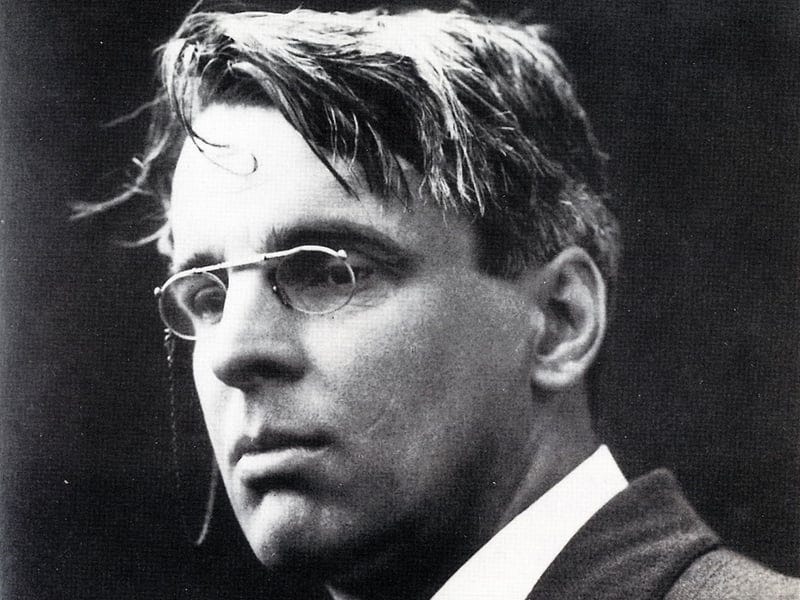
You may think that a woman named Maud could not inspire this poem by the great Irish lyric poet and Nobel Prize winner, W. B. Yeats. You would be incorrect about that.
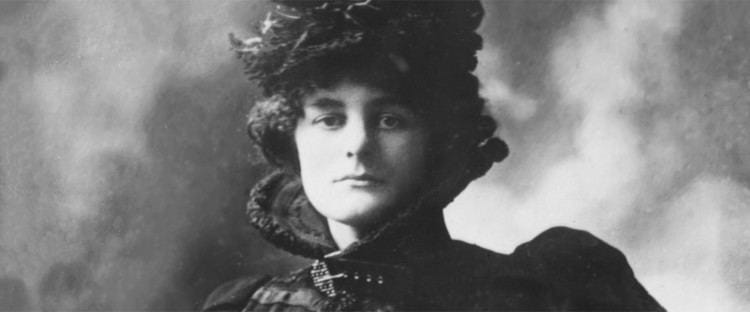
Maud Gonne was a force. She was raised in affluent circumstances in England but moved to Ireland because her father, a military officer, was stationed there. Though English, she became committed to Irish Republicanism - the movement to win independence from Great Britain. She converted to Catholicism in solidarity with the Catholic majority. Maud met Yeats in 1889 in Ireland. She knew and admired Yeat’s father who was a famous portrait painter, and came to visit him at the house where Yeats was also living. Yeats recalled this as the time “ the troubling of my life began.”
Yeats wrote the following about his first impression of Maud : “majestic, unearthly… Immensely tall, bronze-haired, with a strong profile and beautiful skin, she was a fin-de-siecle beauty in Valkyrie mode.”
She was striking - six feet tall, red hair, luminous eyes, an actress, a suffragette, a feminist, a revolutionary, a supporter of the Irish tenants, a nationalist and a founder of numerous organizations and journals supporting Irish independence. Yeats asked her to marry him at least four times. After one painful rejection when Yeats said to her that he cannot be happy without her. Maud replied:
Oh yes you are [happy], because you make beautiful poetry out of what you call your unhappiness and are happy in that. Marriage would be such a dull affair. Poets should never marry. The world will thank me for not marrying you.
Unknown to Yeats (until much later), Maud, who told him that she had an aversion to sex, became pregnant by another man a few months after meeting Yeats. Far from being prudish, Maud was lusty, ambitious and complex, but it is possible based on her letters that she really believed in a spiritual love with Yeats that would be coarsened if they became physical lovers. It is true that the men she is known to have had affairs with could accurately be described as coarse.
The issue of the tryst was a son named Georges whose father was Lucien Millevoye a married French journalist and a right wing nationalist Member of the French Chamber of Deputies. Georges died of meningitis in 1891. Lucien and Maud soon broke it off , but Maud, a believer in spiritualism and the occult, persuaded Lucien to meet her in the vault of Georges’ tomb in order to have sex and bring Georges’ soul back to Earth. The result was Iseult, born in 1894, whom Maud called her niece for years after.
In 1903, Maud married Major John MacBride, a leader of Irish forces determined to overthrow British rule. Yeats described him as a “drunken, vainglorious lout.” He may not have been entirely objective.
Just before the marriage, Yeats sent Maud this remarkable letter:
Dear friend, I appeal to you in the name of 14 years of friendship to read this letter… It is perhaps the last thing I shall ever ask you… Your hands were once put in mine and we were told to do a certain great work together. For all who undertake such tasks there comes a moment of extreme peril. You have come to your moment of peril…
This weakness which has thrust down your soul to a lower order of faith is thrusting you down socially, is thrusting you down to the people…
And they, thirsting for what is above and beyond them, will never forgive it.
You possess your influence in Ireland very largely because you come to the people from above. You represent a superior class, a class whose people are more independent, have a more beautiful life, a more refined life… I have heard you called ‘our great lady’. But Maud Gonne is about to pass away…
The inherent bigotry and class snobbery in this is startling to our democratic ears, but represented a prominent view among European and American upper classes between the wars that in its most toxic form led to WWII. Yeats was not in favor of democracy. He believed that a country should be ruled by aristocrats, the wealthy and the entitled. His nationalism had tinges of fascism. Maud was the same. They both despised Communism. Maud was jailed in 1918 on suspicion of being a German spy in the service of the Kaiser.
Maud and MacBride did not last long, He did not care for her bohemianism and free spirit- at least once she married him. He liked to drink and when he did he liked to beat Maud. Maud was never going to put up with that. They did pause the hostilities long enough to have a son, Sean in 1904, who was later the Chief of the IRA. In that role, Sean was accused of participating in the assassination of a political rival. The charges were dropped and over thirty years later in a turnabout, he won the Nobel Peace Prize. The MacBrides did not divorce, but a French court did enter a decree of separation and support. Maud fled Ireland because she thought the politically powerful MacBride would kidnap Sean.
In 1908, it appears from letters and a poem written by Yeats that Maud and finally had sex. Since he had waited almost 20 years, it was apparently not everything he had fantasized about. He wrote soon after, “The tragedy of sexual intercourse is the perpetual virginity of the soul.” It is unclear what he meant by this rich enigmatic statement, but it appears Maud may have been right all along.
In 1916, John MacBride participated in the Easter Uprising, an armed movement which sought to free Ireland from English rule. The leadership of the rebellion, including MacBride, was captured and executed by a firing squad. He declined the mask by saying, “I have been staring down the muzzles of English guns my whole life - I have no fear of them now.”
Maud responded to MacBride’s heroism thusly, “As for my husband, he has entered eternity by the great door of sacrifice…so that praying for him I can also ask for his prayers.” Her love for Irish independence was so great that she was willing to forgive the martyred MacBride - especially since he was dead.
Yeats, thinking he was finally rid of MacBride, once again asked Maud to marry him. It is not clear he was serious this time because when she turned Yeats down again, he soon asked Iseult to marry him. From her teenage years she had an attraction to the now 50 year old Yeats. He was soon to win the Nobel Prize in Literature so remarkably, she considered it. Maud was striking but Iseult was stunning. She decided that Yeats still loved her mother and that while her mother would not marry Yeats, Maud enjoyed the adulation and would be quite unhappy about the marriage so Iseult also turned him down.
Yeats was Irish to his core and his intent was to revive Irish legends, myths, theater and literature. He also carried a darkness that he identified with the Irish character, “The Irish Man sustains himself through brief periods of joy by the knowledge that tragedy is just around the corner.”
An example of the joy that Yeats saw interfering with his black Irish love of tragedy:
I will arise and go now, and go to Innisfree,
And a small cabin build there, of clay and wattles made;
Nine bean rows will I have there, a hive for the honey bee,
And live alone in the bee-loud glade.
And I shall have some peace there, for peace comes dropping slow,
Dropping from the veils of the morning to where the cricket sings;
There midnight’s all a glimmer, and noon a purple glow,
and evening full of the linnet’s wings.
I will arise and go now, for always night and day
I hear lake water lapping with low sounds by the shore;
While I stand on the roadway, or on the pavements grey,
I hear it in the deep heart’s core.
This season may we all find peace in the deep heart’s core.
You know I love Yeats’s poetry and these two have been my favorite since before I could imagine being old and grey and full of sleep, the rocking chair rhythm familiar now in life, as it was not when I encountered this magical poetry. Your essay brought the magic down to earth with real world historical explanations. Thank you. And thankfully worldly historical information cannot deplete the magic.
Unbelievable but WB is my favorite poet and The Lake Isle at Innisfree one of my favorite poems. When I went to Ireland, I rushed to County Sligo to Drumcliff Cemetery at the foot of Benbulben. “Cast a cold eye one life, On Death Horseman pass by.”
Are we twins separated at birth or what?