
Tom Watson Brown

Tom was a southerner and a conservative. He had a wit and sense of humor that we seldom see today. MAGA would have seemed vulgar and stupid to him and those were two things he hated.
Tom’s great grandfather, Tom Watson ran for President on the Populist ticket twice. Watson was a maddening Southern politician full of contradictions and paradoxes and had an influence on Tom though he died before Tom was born. Tom Watson, like George Wallace, had started out as a racial moderate. He hated the banks, railroads and aristocracy and saw that if poor whites and poor blacks could combine, they could run this country. He saw himself as a Jeffersonian in opposition to the despised Hamilton and in his early life was nearly a socialist.
Around 1900, Watson changed his views and became a virulent nativist, anti-Catholic and racist. It is possible he realized the hatred the poor whites had for the Freedmen was implacable and he just made a cold but rational political decision. It is possible he just got older and meaner. By the time of the Leo Frank trial in 1913, he added Jews to his list and his virulent reporting on the aftermath of the trial was the single most potent factor in the subsequent break-in to the prison and lynching of Leo Frank by leading citizens of Marietta, Georgia.
Tom was every bit as complicated. I once saw him accuse a black summer associate in our law firm of “enslaving my people.” He said it in a kindly way, but he meant it. As you might imagine, the young lawyer was confused. So was I. He meant, I think, that after the Civil War the federal government had taken hold of the South during Reconstruction and never really let go.
You really could not make Tom one dimensional and say he was this or that. Our firm had just started recruiting women and black associates and several partners left. Tom was not one of them. He was congenial with a good deal of sophistication and humor and unlike many of today’s conservatives, he did not depend on racism, deception or anti-intellectual thuggery. I never once heard him use any crudity or vulgarity to make a point. I don’t think he hated anybody though he perhaps disliked Yankees. What he hated was the South’s loss of its agrarian way of life by the force of arms from the North. This required an implicit defense of slavery which discomforted some Southern intellectual apologists, but Jefferson held slaves so Tom could muddle through.
He had gone to an Ivy League School like the sons of Southern aristocrats had done for
a couple of hundred years and he was a brilliant polemicist and raconteur. His best friends were mainly liberals and he was supportive of Lake Rumsey and me when we were young (and liberal) associates. His nickname for us was “those dumb Texans,” but somehow that was funny, and I suspect if he thought we were really dumb, he would not have had anything to do with us. Through him, I met Wyche Fowler, Charlie Weltner, Sidney Marcus, George Berry and other notable liberals. I think Tom thought conservatives were too serious. He did not want to be around people he considered boring or pedantic or unimaginative. He never would agree he was a Republican because Sherman had torched Georgia and of course, Lincoln was the first Republican president.
He never much cared for practicing law and in later life bought a small interest in the Atlanta Falcons which proved to be a spectacular investment. He owned radio stations and media outlets and really did not have to work. Still, the law practice got him out of the house and he worked hard at it. He thought lawyers were somewhat amusing, intelligent, and reasonably well read. He was a great drinker, held it very well and got even funnier the more he drank. He could only be described as homely but always had a beautiful woman around. His second wife was one of the most attractive women I have ever seen. She died young.
Tom was a major philanthropist and was awarded the Peace and Justice award by the MLK Center. He made generous contributions to Legal Aid. He was a soft touch and quietly did much to help the poor through his foundation. He gave numerous scholarships to young men and women - particularly those from the Central Georgia area where his family was from. He was very rich, but you would never know it.
He finished his life with a 10,000 volume library in an antebellum home in Marietta which he willed to Mercer University after he died. The newspapers reported that he was a diabetic. He did nothing to ameliorate or lessen the condition. Life was just not worth living if he could not do what he wanted.
POSTSCRIPT
During recruiting season at our law firm, a rather pretentious applicant from an Ivy League law school asked Tom what our incentive program was. “Fuck up once and you are gone,” said Tom without a moment’s hesitation.
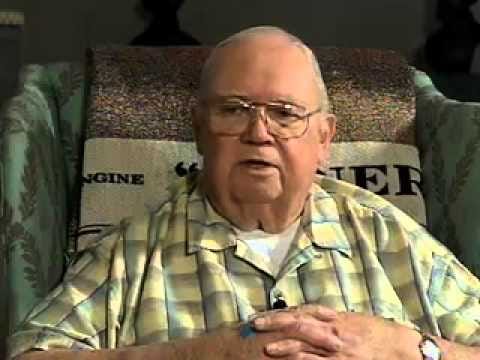
I’ve told that incentive program story a bunch. He was one of a kind. We shared a floor in Cain Tower for a few years and I appreciated his wit and sometimes winced at his opinions.
Another excellent essay by Randy Mayer. Randy has provided us with an accurate portrayal of Tom Watson Brown.